
Andy’s Astronomy: Planets of “Battlestar Galactica”
In 1979, just three years after “Space 1999” was cancelled, the original “Battlestar Galactica” premiered.
This was a very high-budget production that began with a premier movie and phased into a television series.
The story had humans spread across 12 “colonies” located in the far reaches of space with those planets drawing their names from the 12 constellations visible from Earth. Under the guise of peace talks to end a long war, the colonies are attacked by artificial intelligent humanoid robots with the goal of exterminating the human species. Also attacked are the colonies’ 12 battlestars, capital warships, also unprepared for the sneak attack. Perceived similarity to the attack on Pearl Harbor is understandable.
In 1979, just three years after “Space 1999” was cancelled, the original “Battlestar Galactica” premiered.
This was a very high-budget production that began with a premier movie and phased into a television series.
The story had humans spread across 12 “colonies” located in the far reaches of space with those planets drawing their names from the 12 constellations visible from Earth. Under the guise of peace talks to end a long war, the colonies are attacked by artificial intelligent humanoid robots with the goal of exterminating the human species. Also attacked are the colonies’ 12 battlestars, capital warships, also unprepared for the sneak attack. Perceived similarity to the attack on Pearl Harbor is understandable.
As with any such action there are always survivors. There are some on each colony, or planet, and those lucky enough to find a functional ship head into space, led by the Battlestar Galactica, the only battlestar known to have survived.
The premier movie received high ratings as did the initial episodes, but then the quality dropped, the writing and storylines were not as good, and the ratings dropped. The series was cancelled after just 24 episodes. Still, the original “Battlestar Galactica” generated and continues to enjoy quite a cult following.
During those 24 episodes, viewers were introduced to a number of planets, starting with the 12 colonies. Those were Aerilon, Aquaria, Canceron, Caprica, Gemenon, Leonis, Libran, Picon, Sagittaron, Scorpia, Tauron, and Virgon. Of those, only one is actually a planet.
The planet Leonis, or 83 Leonis Bb, was discovered in January 2005, by the California and Carnegie Planet Search Team. It is located about 59 light-years away in the constellation Leo. It is about 1-1/2 times the size of Neptune. Not much else is yet known about Leonis.
After this column updated the status of Pioneer 10 last week, Voyager 1 was in the news.
Having been traveling through space for 50 years, Voyager 1 is still alive.
Last week NASA reported that some of Voyager’s instruments are being shutdown to conserse power allowing other instruments to continue functioning and send data on gas, dust, and radiation to Earth. Voyager 1 is powered by a generator that turns heat from decaying plutonium into electricity.
Voyager 1 is currently about 15.8 billion miles from Earth. It is in interstellar space and heading toward the edge of our Solar System.
Keep your eyes on the sky for passing fireballs.
Meteors can flash across the sky anytime, day or night, with extraordinarily bright meteors often referred to as fireballs — and they are spotted quite often.
On Wednesday, Apr. 22, 30 people across Arizona, Illinois, Indiana, and Missouri reported seeing a fireball.
The fireball was first reported at 9:29 pm Central Time by a skywatcher in Springfield, IL. The fireball was seen as far north as Hopedale, IL, as far east as Loogootee, IN, as far south as Paragould, AR, and as far west as Columbia, MO. The fireball appeared to be travelling from southwest to northeast.
None of the skywatchers reported hearing noise made by the fireball but 13 witnessed it fragment into smaller pieces.
Anyone seeing a fireball is urged to report the sighting to https://amsmeteors.org
We will continue researching planets found in science fiction soon. In the meantime going outside and looking at the sky, especially the night sky, can be fun and educational for the entire family.
There are a number of free apps available to help identify stars and constellations, and some of the apps will show satellites.
Happy skywatching!
Before you go...
Thanks for reading The Talbotton New Era. We hope this article added to your day.
We are a nonprofit, local newsroom that connects you to the whole story of Talbot county. We live, work and play here. Our reporting illuminates and celebrates the people and events that make Middle Georgia unique.
If you appreciate what we do, please join the readers like you who help make our solution-focused journalism possible. Thank you
Related Articles
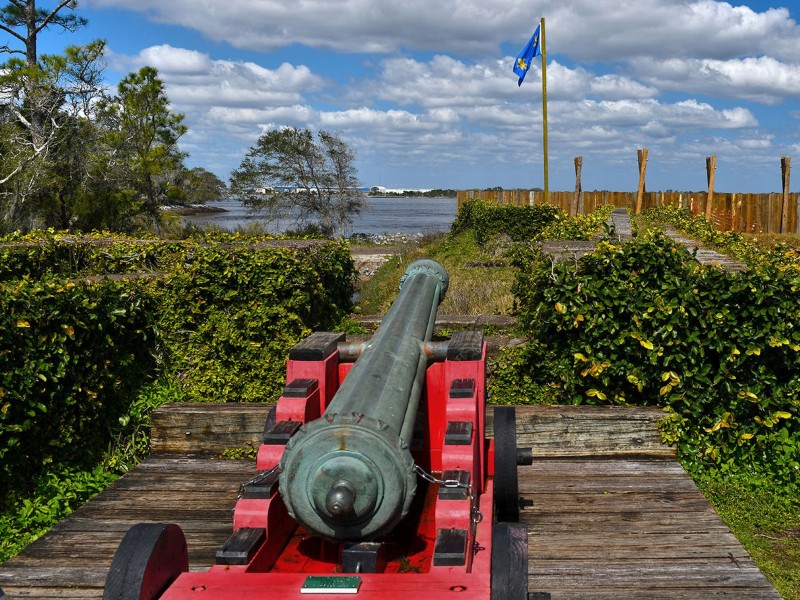
This Week in American History: 1568 – French Forces Attack Spanish Fort San Mateo
• May 3. On this day in 1568, America is not yet a country when French soldiers attack the Spanish fort, San Mateo, located along the banks of the St. Johns River in Florida. Spanish soldiers surviving the battle are slaughtered. This bloodthirsty action was because three years earlier Spanish soldiers out of St. Augustine had attacked the French Fort Carolina located in nearly the same spot.
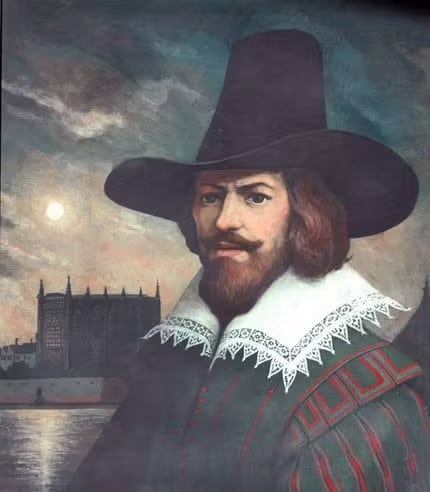
DID YOU KNOW …? Was the execution of a British villain botched, but gone through with anyway?
May day! May day!
No, I’m not signaling distress. I’m simply noting that this week we move on to the fifth month of the year, and the first day is – you guessed it – May day.
Later in the month we get Cinco de Mayo (5th), Mother’s Day (10th), and Memorial Day (25th). Busy month, eh?
Of course, every week there’s this silly trivia column thing that you find in the newspaper, so if the upcoming holiday events aren’t exactly causing you to have tingles of excitement, perhaps the trivia will. I kind of hope so, anyway.
Enjoy!

* South Georgia Historic and Horrific Wildfires *
Greetings and blessings! Today I’m overly concerned, disturbed and heavily sadden as I watched the South Georgia Wildfires news for the past days. It has been more than a week since wildfire has ripped, destroyed and ravished everything in its path. I’ve seen it in the other parts of the country but not in Georgia. These unprecedented and unpredictable fires in Clinch and Brantley Counties, Hwy 82 have caused severe, devastating damage in more ways than one. Unfortunately, more than 120 homes, including other structures, and vehicles have been burned to the ground. Unbelievable, but so, more than 50 thousand acres torched as the fires were reported, doubled last night.