
The Early History of Christmas (Part 2)
Only two weeks remain until Christmas.
Last week we explored some of the ancient festivals that impacted the modern celebration of Christmas.
Among those were various gatherings conducted around the winter solstice, during which people bought or traded for the things they needed or wanted.
There was the Northern European Yule that not only celebrated the winter solstice, but the return of the Sun in the form of longer days. From it comes the giving of gifts and decorating with evergreen boughs. This festival could last up to 12 days – from which the “Twelve Days of Christmas” might be drawn.
The Roman Empire had two winter festivals Saturnalia and Sol Invictus, or Dies Natalis Solis Invicti. During the first, homes were decorated with holly, fir, ivy, or whatever greenery was available along with the giving of small gifts. The second was held specifically on December 25.
The similarities between these historic celebrations and the modern celebration of Christmas are undeniable, yet there is more history to uncover.
By Andy Kober
Only two weeks remain until Christmas.
Last week we explored some of the ancient festivals that impacted the modern celebration of Christmas.
Among those were various gatherings conducted around the winter solstice, during which people bought or traded for the things they needed or wanted.
There was the Northern European Yule that not only celebrated the winter solstice, but the return of the Sun in the form of longer days. From it comes the giving of gifts and decorating with evergreen boughs. This festival could last up to 12 days – from which the “Twelve Days of Christmas” might be drawn.
The Roman Empire had two winter festivals Saturnalia and Sol Invictus, or Dies Natalis Solis Invicti. During the first, homes were decorated with holly, fir, ivy, or whatever greenery was available along with the giving of small gifts. The second was held specifically on December 25.
The similarities between these historic celebrations and the modern celebration of Christmas are undeniable, yet there is more history to uncover.
ABOUT 312 AD, Roman Emperor Constatine converted to Christianity, which had been observed underground, and legalized it. From that, Christianity grew and established its own set of religious holidays.
The historical record does not provide an absolute date the celebration that became Christmas was first observed. Some thought pegs 336 AD as the first year, but there is apparently some evidence that celebrations were held prior to that. By the fourth century church leaders had decided to celebrate the birth of Jesus but a problem ensued — when to celebrate it.
With all due respect to Biblical scholars, nowhere in the Bible is December 25 identified as being the birthdate of Jesus. It would be Pope Julius I, about 350 AD, who would choose December 25 as the day of celebration and many believe that was done deliberately to overshadow the Roman celebrations of Saturnlia and Dies Natalis Solis Invicti. Even then it was not called Christmas, but rather the Feast of the Nativity.
By the end of the sixth century, the celebration of Christmas had spread across the Roman Empire and into England. During the Middle Ages, about 500 to 1500 AD, Christianity supplanted the various pagan religions, and Christmas was largely celebrated by attending church followed by raucous and often drunken revelry.
The celebration of Christmas came to an end in the early 17th century as in 1640, the Parliament of Scotland abolished the celebration of Christmas. Then in 1645, Oliver Cromwell, statesman, soldier, and politician – it seems that politicians always ruin things – and the Puritans took over control of England, and among other actions cancelled Christmas. After Cromwell died and the Puritans fell out of power, King Charles II returned to the throne and Christmas was restored.
After arriving in America, the Pilgrims did not celebrate Christmas which was outlawed in Boston. There was even a substantial fine for celebrating Christmas. But in the Jamestown settlement, Capt. John Smith and his explorers continued celebrating Christmas.
After the American Revolution, many English customs were quickly abandoned and one of those was Christmas. In fact, though varied Christmas celebrations were held, it would not be until June 1870 – just 155 years ago — under the presidency of Ulysses Grant that Christmas would become a federal holiday.
WE HAVE skipped some permutations of Christmas and next week we will explore the evolution of Christmas and until then here is hoping you enjoy the lights, decorations, and fun of the season.
That’s my opinion.
A newspaper columnist for over 35 years, Andy Kober can be reached by email at andykober@hotmail.com
Before you go...
Thanks for reading The Talbotton New Era. We hope this article added to your day.
We are a nonprofit, local newsroom that connects you to the whole story of Talbot county. We live, work and play here. Our reporting illuminates and celebrates the people and events that make Middle Georgia unique.
If you appreciate what we do, please join the readers like you who help make our solution-focused journalism possible. Thank you
Author

Related Articles

Granddaughter of Talbot Residents Accepted at Georgia Tech University
Friday, Dec. 5 is a day that three seniors from Upson Lee High School in Thomaston, including Ms. Aisha Derico, granddaughter of life-long Talbot County residents, John and Carolyn Lamar of Talbotton, will never forget.
Georgia Tech Admissions officer, Christina Scott, traveled to Thomaston to personally deliver the news that three young ladies that had applied for early admission to Georgia Tech had all been accepted.
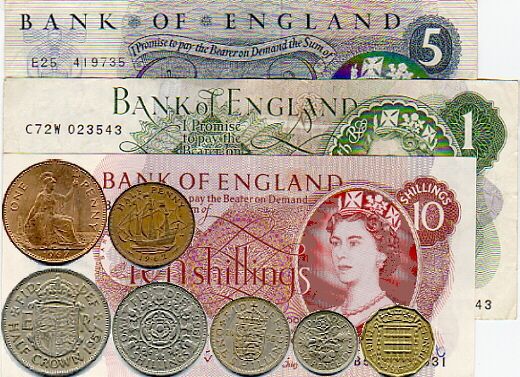
DID YOU KNOW …? Why was British money so confusing to the rest of the world before 1971?
When you see this column, it will be time to begin waving goodbye to 2025.
I hope your Christmas was a wonderful one, and that you are planning a happy (but very safe) celebration for the incoming new year. Me? I’m going to bed early. I’m too old for all that celebrating stuff.
Next time we meet, the calendar will say it’s 2026 … for all of us, though, it’s always trivia time. Here’s the last column of the year, and I hope you like it!
Happy New Year, everybody!

I Can’t Wait for This Year to End
I won’t presume to speak for anyone other than myself, but I will be exquisitely happy to see 2025 in the rear-view mirror of life. Of my years on this planet, it has to rank as one of the worst.
During the course of my 67 years, I’ve had some bad years. I’ve also had some very, very good ones:
There’s 1958, for instance, the year I was born. That has to rate as a good year, at least from my perspective.
I would say 1968 was a good year – that was the year I got to visit the WGN-TV studios in Chicago and attend the Bozo’s Circus show with my school class. Later that year I had the opportunity to meet my boyhood idol, television weatherman Harry Volkman. Mr. Volkman came to speak at our school (at my invitation) and I got my picture in the local neighborhood newspaper with him, on the front page no less.